
Modern businesses rely on multiple software platforms to manage operations, sales, finance, marketing, and customer support. While these tools are powerful individually, they often operate in isolation. When systems do not communicate effectively, data becomes fragmented, workflows slow down, and decision-making suffers. This is where System Integration and Data Sync becomes essential.
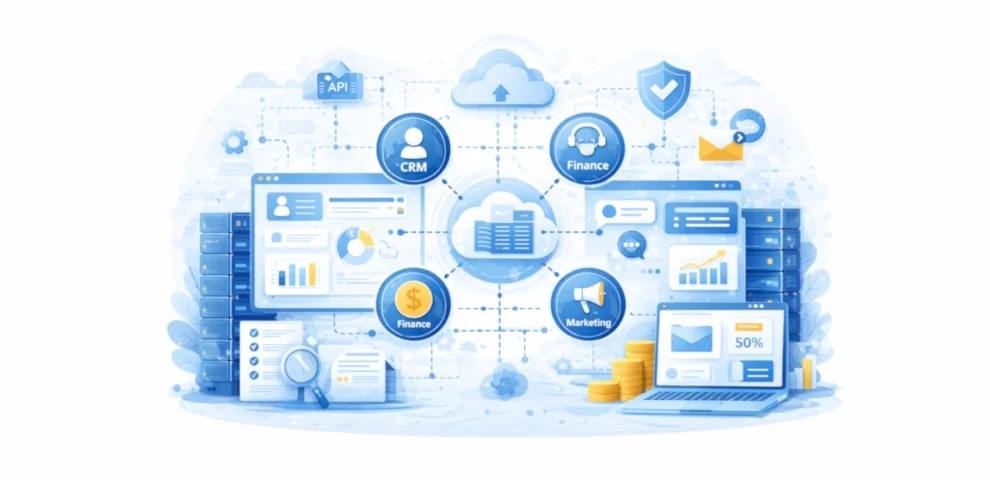
System Integration and Data Sync connects business applications into a unified ecosystem, enabling real-time data flow and automated processes. For U.S.-based organizations aiming to improve efficiency and scalability, integrated systems are the foundation of modern, connected operations.
This article explains what system integration and data synchronization are, why they matter, and how they support smarter business performance.
What Is System Integration and Data Sync?
System Integration involves connecting different software systems so they can share data and trigger actions automatically. Data Sync ensures that information remains consistent and up to date across all connected platforms.
Together, System Integration and Data Sync enable:
-
Seamless data exchange between tools
-
Automated workflows across platforms
-
Real-time updates and reporting
-
Elimination of manual data entry
At Crafts Flow, integration strategies are designed to align systems with business processes—not the other way around.
The Cost of Disconnected Systems
When systems operate independently, businesses face hidden inefficiencies that grow over time.
Common Problems Caused by System Silos
-
Duplicate data across platforms
-
Inconsistent customer and operational records
-
Manual reconciliation and reporting
-
Delayed responses and decisions
-
Reduced visibility into performance
These issues increase operational costs and limit scalability. System Integration and Data Sync address these challenges directly.
How System Integration Improves Operational Efficiency
Automated Data Flow
Integrated systems automatically share data between platforms. When information is entered or updated in one system, it syncs instantly across others.
This automation:
-
Reduces manual work
-
Eliminates duplicate entries
-
Improves data accuracy
Teams spend less time managing data and more time executing.
Faster Workflow Execution
System integration allows workflows to move across platforms without manual triggers. For example:
-
A new lead in the CRM triggers onboarding workflows
-
A completed order updates billing and inventory systems
-
Support tickets sync with customer records automatically
Workflows move faster and more reliably.
Why Data Sync Is Critical for Accuracy
Real-Time Data Consistency
Data Sync ensures all systems reflect the same information at the same time. This consistency is critical for reporting, compliance, and customer interactions.
Real-time sync supports:
-
Accurate dashboards
-
Reliable forecasting
-
Confident decision-making
Reduced Errors and Rework
Manual data transfers often lead to mistakes. Automated data sync applies consistent rules, reducing errors and the need for corrections.
Cleaner data improves trust and operational stability.
Key Systems That Benefit From Integration
CRM and Sales Platforms
Integration ensures leads, contacts, and deal updates flow seamlessly across marketing, sales, and support systems.
Marketing Platforms
Integrated marketing systems enable better campaign tracking, personalization, and ROI measurement.
Customer Support Systems
Support tools sync with CRMs to provide agents with full customer context, improving resolution times.
System Integration as a Growth Enabler
Supporting Scalability
As businesses grow, disconnected systems become harder to manage. Integrated systems scale more easily, supporting higher data volumes and user activity.
Scalable integration ensures:
-
Stable performance
-
Consistent data
-
Flexible expansion
Enabling Advanced Automation
System Integration and Data Sync are prerequisites for advanced automation and AI-driven workflows. Without integration, automation remains limited.
Connected systems enable:
-
End-to-end workflow automation
-
AI assistants with real-time context
-
Predictive analytics and reporting
Integration Approaches and Technologies
API-Based Integrations
APIs allow systems to communicate securely and efficiently. They are the backbone of modern integration strategies.
Event-Driven Automation
Event-driven integrations trigger workflows based on real-time actions, ensuring fast and responsive operations.
Cloud-Based Integration Platforms
Cloud solutions support scalable, flexible integrations without heavy infrastructure requirements.
Why System Integration Matters for U.S. Businesses
U.S. businesses face high operational costs, complex compliance requirements, and strong competition. System Integration and Data Sync help organizations operate more efficiently while maintaining accuracy and security.
Benefits include:
-
Faster decision-making
-
Improved compliance and audit readiness
-
Better customer experiences
-
Reduced operational overhead
Integration becomes a strategic advantage rather than a technical task.
Best Practices for Successful System Integration
-
Clearly define integration goals
-
Prioritize critical systems first
-
Ensure data quality and governance
-
Use secure, scalable integration methods
-
Monitor and optimize continuously
At Crafts Flow, integrations are built with performance, security, and long-term adaptability in mind.
Overcoming Common Integration Challenges
Legacy Systems
Custom connectors and APIs allow modern platforms to integrate with legacy systems without disruption.
Data Security Concerns
Secure authentication, encryption, and access controls protect sensitive information during data transfers.
Complexity Management
Well-documented integration architecture reduces complexity and supports future expansion.
Conclusion
System Integration and Data Sync are foundational to efficient, connected business operations. By eliminating silos, automating data flow, and ensuring real-time accuracy, integration enables faster decisions and scalable growth.
For U.S.-based organizations seeking to modernize operations, system integration is not just an IT initiative—it is a business strategy. With the right approach, integrated systems empower teams, improve customer experiences, and support long-term success.