

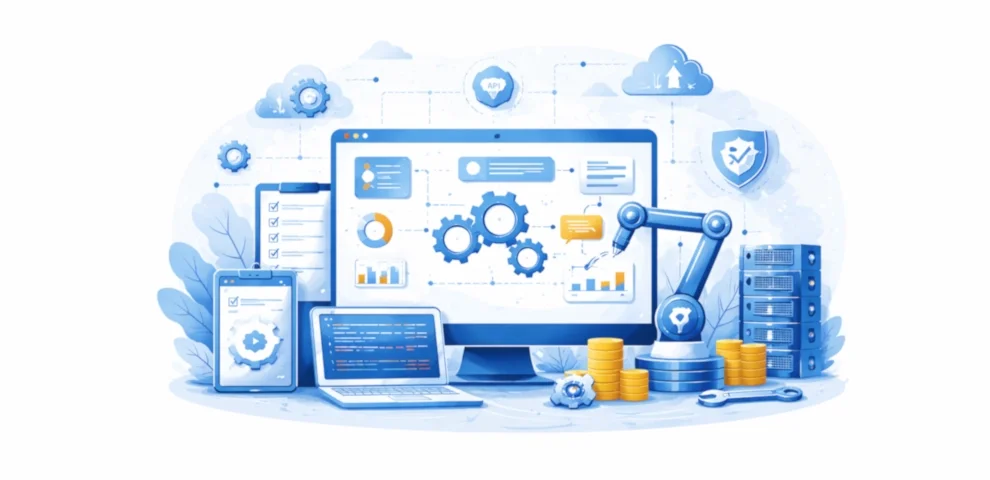
Off-the-shelf software can support basic business needs, but as companies grow, standard tools often become limiting. Unique workflows, specialized integrations, and industry-specific requirements demand solutions that generic software cannot fully support. This is where Custom Automation Software Development delivers real value.
Custom automation software is designed specifically around how a business operates—automating processes, integrating systems, and scaling efficiently as demand increases. For U.S.-based companies seeking long-term efficiency and flexibility, custom automation provides a competitive edge that prebuilt tools simply cannot match.
This article explores what custom automation software development is, why it matters, and how it enables sustainable business growth.
What Is Custom Automation Software Development?
Custom Automation Software Development involves designing and building automation solutions tailored to a company’s exact workflows, systems, and business goals. Unlike off-the-shelf platforms, custom solutions are developed from the ground up to fit existing processes instead of forcing teams to adapt to rigid software limitations.
These solutions can include:
-
Automated workflows and task orchestration
-
Custom dashboards and reporting systems
-
API-based system integrations
-
AI-powered automation logic
-
Scalable backend automation platforms
At Crafts Flow, custom automation is built to evolve alongside the business, ensuring flexibility and performance over time.
Why Standard Automation Tools Often Fall Short
Many businesses start with prebuilt automation platforms, but challenges quickly arise as operations grow more complex.
Limitations of Off-the-Shelf Automation
-
Restricted customization options
-
Limited integration with legacy systems
-
Performance issues at scale
-
Inflexible workflows
-
Rising subscription costs
These limitations can slow growth, increase operational risk, and create dependency on tools that no longer align with business needs.
Custom Automation Software Development eliminates these constraints by delivering solutions designed specifically for the organization.
How Custom Automation Software Improves Efficiency
Tailored Workflow Automation
Custom automation software mirrors real-world workflows instead of generic process templates. This ensures tasks flow logically between teams, systems, and approvals without unnecessary steps.
Tailored workflows:
-
Reduce manual intervention
-
Improve task consistency
-
Minimize delays
-
Increase operational clarity
Efficiency improves because the software works the way the business works.
Intelligent System Integration
Modern businesses rely on multiple platforms—CRMs, ERPs, accounting systems, marketing tools, and support software. Custom automation enables seamless communication between these systems through APIs and custom connectors.
Integrated systems ensure:
-
Real-time data synchronization
-
Reduced data duplication
-
Improved reporting accuracy
-
Faster decision-making
Custom integration removes operational silos.
Scalability Built Into the Core
One of the strongest advantages of custom automation software is scalability. Solutions are designed to handle increased volume, users, and complexity without performance degradation.
Scalability Benefits Include:
-
Supporting business growth without replatforming
-
Adapting to new processes and services
-
Expanding automation across departments
-
Handling peak demand efficiently
For U.S. businesses planning long-term growth, scalability is essential.
Enhanced Accuracy and Compliance
Reduced Human Error
Custom automation minimizes manual data entry and repetitive tasks, significantly reducing errors. Automated logic ensures consistent execution across all workflows.
This is especially valuable in:
-
Financial operations
-
Healthcare workflows
-
Legal and compliance-driven processes
-
Customer data handling
Accuracy improves trust and reliability.
Built-In Compliance Controls
Custom automation software can be designed with compliance requirements embedded directly into workflows. This ensures policies, approvals, and audit trails are consistently enforced.
Compliance-ready automation reduces operational risk while simplifying audits and reporting.
Custom Automation vs. No-Code Tools
No-code and low-code platforms offer quick automation, but they often lack flexibility for complex operations.
Key Differences
| No-Code Tools | Custom Automation |
|---|---|
| Limited customization | Fully tailored logic |
| Platform restrictions | Complete system control |
| Subscription dependency | Ownership of solution |
| Scaling limitations | Built for growth |
Custom Automation Software Development provides control, performance, and long-term value that no-code platforms cannot match.
Business Areas That Benefit Most From Custom Automation
Operations and Internal Workflows
Automating internal processes improves task coordination, approvals, reporting, and resource allocation.
Sales and Customer Lifecycle Management
Custom automation supports lead routing, follow-ups, deal tracking, and CRM synchronization—improving conversion efficiency.
Customer Support and Engagement
Custom systems automate ticket routing, response workflows, escalation rules, and feedback tracking for consistent service delivery.
The Custom Automation Development Process
Successful automation requires a structured approach.
Typical Development Phases
- Discovery and requirement analysis
- Workflow and system architecture design
- Custom development and integration
- Testing and validation
- Deployment and optimization
At Crafts Flow, development focuses on reliability, performance, and long-term adaptability.
Why Custom Automation Is a Strategic Investment
While custom development requires upfront planning, it delivers long-term ROI by eliminating inefficiencies, reducing tool sprawl, and supporting business growth.
Strategic benefits include:
-
Lower long-term operational costs
-
Improved process visibility
-
Faster response times
-
Greater control over technology stack
Custom automation becomes a business asset, not just a tool.
Why U.S. Businesses Choose Custom Automation
U.S. companies operate in competitive markets where efficiency, compliance, and scalability are critical. Custom Automation Software Development helps organizations stay agile while meeting regulatory and operational demands.
By investing in tailored solutions, businesses gain flexibility, performance, and a sustainable competitive advantage.
Conclusion
Custom Automation Software Development empowers businesses to automate on their own terms. By building solutions tailored to specific workflows, systems, and growth goals, organizations achieve efficiency, accuracy, and scalability that off-the-shelf tools cannot provide.
For U.S.-based companies seeking long-term automation success, custom software is not just an upgrade—it is a strategic foundation for future growth.