

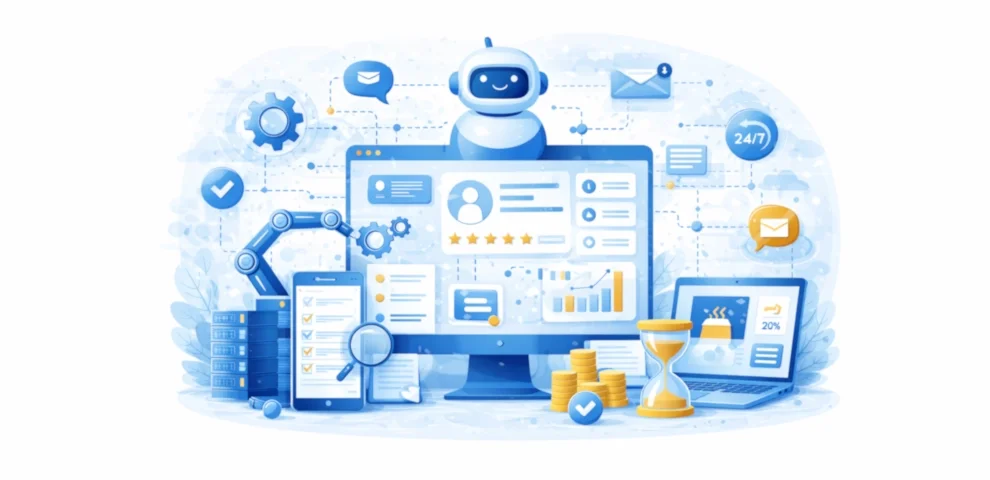
Businesses today operate in an environment where speed, accuracy, and responsiveness define success. Customers expect instant answers, teams face growing workloads, and competition continues to increase. Relying solely on manual processes makes it difficult to meet these demands. This is where AI Assistants and Automation play a critical role.
AI Assistants and Automation help businesses streamline operations, support employees, and enhance customer interactions without increasing headcount. By combining intelligent assistants with automated workflows, organizations can operate more efficiently while maintaining high-quality experiences. For U.S.-based businesses, this approach has become a practical and scalable way to stay competitive.
This article explores how AI Assistants and Automation work together, the business problems they solve, and why they are essential for modern organizations.
What Are AI Assistants and Automation?
AI Assistants are intelligent software agents that understand user inputs, process information, and perform tasks automatically. When paired with automation workflows, they can manage end-to-end processes without constant human involvement.
AI Assistants and Automation can handle tasks such as:
-
Responding to customer inquiries
-
Routing requests and tickets
-
Scheduling appointments
-
Processing data and documents
-
Triggering workflows across systems
Unlike traditional automation, AI assistants adapt to context, learn from interactions, and support more complex use cases.
At Crafts Flow, AI-powered automation is designed to support both internal teams and customer-facing operations.
Why Businesses Are Adopting AI Assistants Faster Than Ever
As organizations grow, operational complexity increases. AI Assistants and Automation help businesses manage this complexity efficiently.
Key Drivers of Adoption
-
Rising customer expectations for instant responses
-
Increased workload across support and operations teams
-
Need for 24/7 availability
-
Pressure to reduce operational costs
-
Demand for scalable solutions
AI assistants provide immediate value by improving responsiveness and reducing manual effort.
How AI Assistants Improve Operational Efficiency
Automating Repetitive Tasks
AI assistants handle repetitive tasks that would otherwise consume employee time. This includes answering common questions, updating records, and initiating workflows.
By automating these activities:
-
Teams save time
-
Processes move faster
-
Operational consistency improves
Employees can focus on strategic and creative work instead of routine tasks.
Intelligent Task Routing
AI assistants analyze requests and route them to the right person or system automatically. Whether it is a customer inquiry or an internal request, tasks are assigned accurately and instantly.
This reduces delays and improves resolution times.
24/7 Availability
AI Assistants and Automation operate continuously. Customers and employees receive support at any time, regardless of business hours or time zones.
Always-on availability improves satisfaction and ensures no request goes unanswered.
Enhancing Customer Experience With AI Assistants
Instant and Accurate Responses
AI assistants provide immediate responses to frequently asked questions. Customers no longer wait in queues for basic information.
Fast responses lead to:
-
Higher customer satisfaction
-
Reduced frustration
-
Increased trust
Personalized Interactions
Modern AI assistants use customer data and interaction history to personalize responses. This creates a more engaging and relevant experience.
Personalization improves customer engagement while maintaining consistency.
Seamless Omnichannel Support
AI Assistants and Automation integrate across websites, chat platforms, email, and CRM systems. Conversations continue smoothly across channels without requiring customers to repeat information.
This seamless experience strengthens customer relationships.
Supporting Internal Teams With AI Automation
AI assistants are not limited to customer-facing roles. They also support internal teams by automating operational tasks.
Common Internal Use Cases
-
Assisting employees with internal requests
-
Automating approvals and notifications
-
Providing quick access to information
-
Supporting HR, finance, and operations workflows
Internal AI assistants improve productivity and reduce administrative burden across departments.
Key Components of an Effective AI Automation Strategy
AI-Powered Chatbots and Virtual Agents
These assistants understand natural language, identify intent, and respond intelligently. They act as the first point of contact for customers and employees.
Workflow Automation Integration
AI assistants trigger automated workflows based on user input. This ensures tasks move forward without manual intervention.
For example:
-
Creating tickets automatically
-
Updating CRM records
-
Sending confirmations and alerts
Data and System Integration
AI assistants rely on connected systems to function effectively. Integration ensures access to accurate data and real-time updates.
Connected systems lead to smarter automation outcomes.
AI Assistants Across Industries
Healthcare
AI assistants manage appointment scheduling, patient inquiries, and follow-ups—reducing administrative workload and improving patient communication.
E-commerce
Automation supports order tracking, returns, and customer inquiries while handling high volumes efficiently.
SaaS and Technology
AI assistants guide onboarding, answer product questions, and support troubleshooting—improving user adoption and retention.
Professional Services
Automation handles client communication, scheduling, and document processing for consistent service delivery.
Why AI Assistants and Automation Matter for U.S. Businesses
U.S. businesses operate in competitive markets where efficiency and customer experience are critical. AI Assistants and Automation help organizations scale operations without increasing costs or complexity.
Benefits include:
-
Faster response times
-
Improved service quality
-
Lower operational costs
-
Better employee productivity
-
Scalable growth
For growing organizations, AI-powered automation becomes a strategic advantage.
Implementing AI Assistants Successfully
Best Practices
-
Start with clear use cases
-
Keep automation aligned with business goals
-
Maintain human escalation paths
-
Train AI assistants using real data
-
Continuously improve performance
At Crafts Flow, AI assistants are designed to work alongside teams—not replace them.
Addressing Common Concerns About AI Automation
Some businesses worry about accuracy, control, or customer acceptance. These concerns are addressed through:
-
Clear automation rules
-
Ongoing monitoring and optimization
-
Human oversight for complex cases
-
Transparent communication with users
When implemented correctly, AI Assistants and Automation build trust rather than resistance.
Conclusion
AI Assistants and Automation are transforming how modern businesses operate. By automating repetitive tasks, improving response times, and supporting both customers and internal teams, they deliver efficiency at scale.
For U.S.-based organizations seeking smarter operations and sustainable growth, AI-powered automation is no longer optional—it is essential. With the right strategy and implementation, AI Assistants and Automation become powerful tools for efficiency, engagement, and long-term success.