

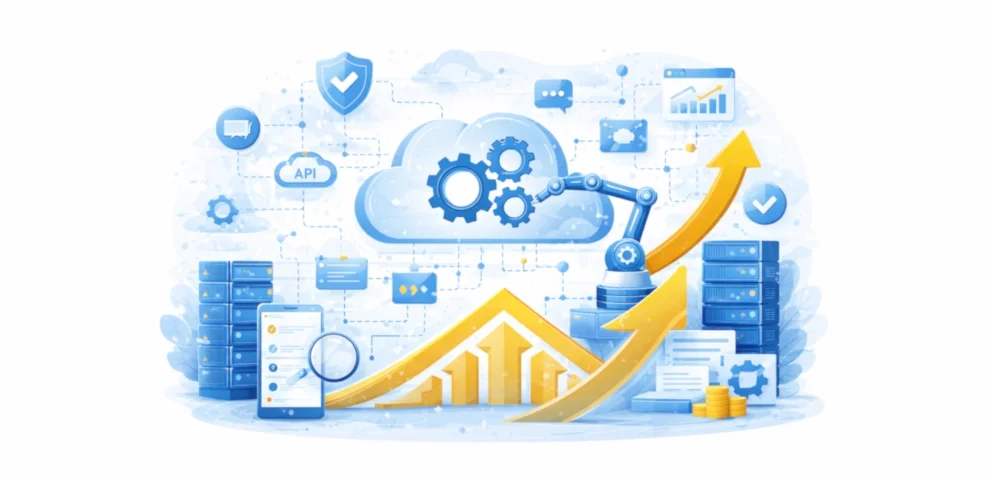
Modern businesses are under constant pressure to grow faster, operate leaner, and adapt quickly to changing market demands. While automation helps reduce manual work, not all automation solutions are built to scale. Many organizations struggle when early automation setups break, slow down, or become expensive as operations expand.
This is where Scalable Automation Architecture becomes critical. A scalable automation foundation ensures your systems grow smoothly alongside your business—without rework, performance issues, or rising technical debt. At Crafts Flow, scalable automation architecture is designed to support long-term growth, flexibility, and reliability for U.S.-based businesses across industries.
This article explains what scalable automation architecture is, why it matters, and how businesses can build automation systems that remain efficient as complexity increases.
What Is Scalable Automation Architecture?
Scalable automation architecture refers to the design framework that allows automated systems to handle increasing workloads, users, and processes without performance loss or major restructuring.
Instead of building one-off automations, scalable architecture focuses on:
-
Modular workflows
-
Reusable automation components
-
Cloud-ready infrastructure
-
API-first system connections
-
Secure and flexible data handling
The goal is to ensure automation continues delivering value as your organization grows.
Why Scalability Matters in Business Automation
Many automation projects fail not because automation is ineffective, but because it was built without growth in mind. Businesses that ignore scalability often face:
-
Automation failures during peak demand
-
Slower system response times
-
High maintenance and reengineering costs
-
Data inconsistencies across tools
-
Security and compliance risks
Scalable automation architecture prevents these issues by planning for growth from day one.
Core Elements of Scalable Automation Architecture
Modular Workflow Design
Modular automation breaks processes into smaller, independent components. Each module handles a specific function—such as data capture, validation, or notifications.
Benefits include:
-
Easy updates without disrupting the full system
-
Faster troubleshooting
-
Reuse across multiple workflows
This structure ensures automation evolves without rebuilding everything from scratch.
API-First Integration Strategy
APIs play a central role in scalable automation. An API-first approach ensures that systems communicate reliably and can be expanded as new tools are added.
Key advantages:
-
Faster integration of new platforms
-
Reduced dependency on manual connectors
-
Improved data consistency
For U.S. businesses using CRMs, ERPs, payment platforms, and marketing tools, APIs create a future-proof integration layer.
Cloud-Based Infrastructure
Cloud infrastructure allows automation systems to scale resources automatically based on demand.
Cloud-based automation supports:
-
Traffic spikes during peak business cycles
-
Distributed teams and remote access
-
Faster deployment of new automation features
Scalable automation architecture relies on cloud environments to maintain speed, reliability, and uptime.
Centralized Data Management
As automation expands, data volume increases rapidly. Scalable systems use centralized data handling to ensure accuracy and accessibility.
Centralized data architecture enables:
-
Real-time reporting and analytics
-
Fewer data conflicts between systems
-
Easier compliance with U.S. data regulations
This foundation supports smarter decisions and long-term system stability.
Designing Automation for Business Growth
Automation That Supports Expansion
Scalable automation architecture allows businesses to grow without automation becoming a bottleneck. Whether adding new locations, teams, or services, systems remain stable and responsive.
Growth-focused automation supports:
-
Higher transaction volumes
-
Increased customer interactions
-
New product or service lines
Automation becomes a growth enabler—not a limitation.
Performance Optimization at Scale
As usage increases, poorly designed automation can slow operations. Scalable architecture includes performance monitoring and optimization strategies.
This includes:
-
Load balancing for automation processes
-
Event-driven workflows instead of time-based triggers
-
Monitoring tools for early issue detection
These practices ensure consistent performance even during high demand.
Security and Compliance Built In
Scaling automation increases security risks if not managed correctly. Scalable automation architecture embeds security controls from the start.
Security-focused automation includes:
-
Role-based access controls
-
Secure API authentication
-
Encrypted data transfers
-
Audit logs for compliance
This is especially important for U.S. businesses handling customer data, financial records, or regulated information.
Common Automation Architecture Mistakes to Avoid
Many businesses face scalability issues due to early design choices. Common mistakes include:
-
Hardcoding workflows instead of modular design
-
Relying on manual integrations
-
Ignoring performance testing
-
Over-automating without governance
-
Failing to document automation logic
Avoiding these pitfalls ensures automation remains flexible and cost-effective over time.
How Crafts Flow Builds Scalable Automation Architecture
At Crafts Flow, scalable automation architecture is not an afterthought—it is the foundation of every solution.
Our approach includes:
-
Detailed process and growth analysis
-
Modular automation frameworks
-
API-driven system integrations
-
Cloud-native deployment strategies
-
Continuous optimization and monitoring
Automation solutions are designed to evolve with your business, not limit it.
When Should a Business Invest in Scalable Automation?
Scalable automation architecture is ideal when:
-
Operations are growing quickly
-
Multiple systems need long-term integration
-
Automation is critical to customer experience
-
Manual work limits team productivity
-
Future expansion is planned
Early investment in scalable design prevents costly rebuilds later.
Conclusion
Scalable Automation Architecture is the backbone of sustainable business automation. It ensures systems remain reliable, secure, and efficient as your organization grows. Instead of reacting to automation breakdowns, businesses can scale confidently with a well-designed architecture. For U.S.-based companies seeking long-term efficiency and growth, scalable automation is not optional—it is essential. With the right foundation, automation becomes a strategic asset that adapts to change and fuels continued success.
Crafts Flow helps businesses design automation architectures that grow seamlessly, perform consistently, and deliver measurable results—today and in the future.